Menu
about me...
find out about Stuart McGoo
Hello
Find out about Stuart McGoo
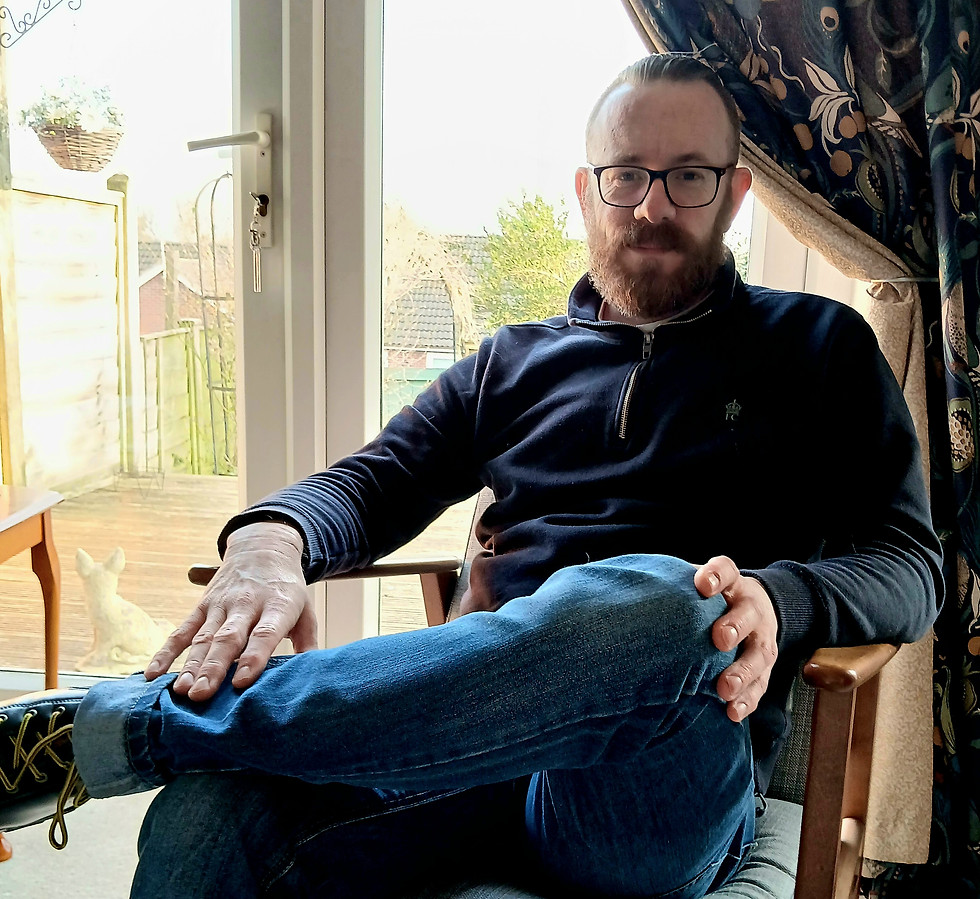
I’m Stuart McGoo (most people call me Stu), an Integrative Counsellor offering thoughtful, grounded counselling for adults who want a space to be heard, understood, and taken seriously.
Before training as a counsellor, I spent over 15 years working alongside disabled people, people living with long-term health conditions, and people in crisis. Much of that work involved supporting individuals who had been worn down by complex systems — health services, benefits, education, employment — and who carried not only emotional pain, but exhaustion, frustration, and a deep sense of being misunderstood.
Becoming a counsellor felt like a natural progression. I wanted to offer something slightly different: therapy that is emotionally attuned and rooted in real-world understanding; a space where distress is not pathologised or minimised, and where your experiences make sense in context.
How I Work
I am an Integrative Counsellor, working primarily from Person-Centred and Psychodynamic approaches to understanding ourselves, and employing Low-Intensity CBT for people dealing with anxiety when appropriate. In practice, this means I don’t believe in a one-size-fits-all model of therapy.
Person-centred work offers warmth, acceptance, and respect for your autonomy. Psychodynamic thinking allows us to gently explore patterns, relationships, and experiences — past and present — that may be shaping how you feel today. Together, these approaches allow therapy to be responsive, reflective, and deeply human.
Sessions with me are collaborative rather than directive. I won’t tell you how to live your life, but I will walk alongside you as you make sense of it.
Lived Experience and Neurodivergence
I am neurodivergent myself — dyslexic, dyspraxic, and AuDHD — and this informs how I practice. Addtionally, I live with Ehlers Danlos Syndrome, Fibromyalgia and a few other conditions for good measure! I work in a way that is flexible, affirming, and respectful of difference.
I understand that traditional therapy models don’t always work for neurodivergent people, and I’m attentive to pace, communication style, sensory needs, and the impact of masking and burnout. Therapy with me is not about fixing or normalising you — it’s about understanding yourself more fully and finding ways to live with greater self-compassion.
Professional Standards
I work to high ethical and professional standards and follow the BACP Ethical Framework for the Counselling Professions. I am registered with the National Counselling and Psychotherapy Society (NCPS) and undertake regular clinical supervision and ongoing professional development.
Confidentiality, consent, boundaries, and your wellbeing are central to my practice.
Who I Work With
I work with adults (18+) who may be experiencing:
• Anxiety, depression, stress, or emotional overwhelm
• Trauma and PTSD (including complex or long-term trauma)
• Long-term health conditions such as Fibromyalgia, ME/CFS, Ehlers-Danlos Syndrome (EDS), RA or MS
• Neurological conditions or acquired brain injury
• Men experiencing issues relating to relationships, masculinity, self-image, anxiety and anger issues
• Women experiencing issues relating to relationships, self-image, anxiety, health, menopause and depression.
• Neurodivergence, including Autism, ADHD, ADD, and AuDHD
• Identity issues, low self-worth, or burnout following prolonged adversity
Many of my clients come to therapy feeling worn down, unheard, or disconnected from themselves after years of coping alone. You don’t need to be in crisis to seek counselling — you just need a sense that something isn’t quite right and a willingness to explore it.
Who I May Not Be the Right Fit For
Choosing a counsellor is an important decision, and it’s okay to be honest about fit.
I may not be the right therapist for you if:
• You are looking for highly structured, manual-based therapy with set homework or techniques
• You want quick fixes or advice-giving rather than reflective exploration
• You are seeking couples counselling or family therapy (I currently work one-to-one with adults only)
• You require specialist support that is outside my current scope (for example, acute
addiction services or crisis intervention)
If I feel I’m not the right person to support you, I will always aim to discuss this openly and, where possible, help you think about alternative options.
Taking the Next Step
If something in what you’ve read resonates, you’re welcome to get in touch for an initial conversation. There’s no pressure or obligation — just a chance to ask questions and see whether working together feels right for you.